Camping
Portable Camping Stoves
Introduction
An important part of camping is having a stove that fits your needs. We have used many camping stoves since we started hiking and birdwatching in the 80s. I want to share some of our experiences, with these stoves, with you.
Cadac 7lb gas cylinder with potjie cooker
Although this wasn't our first camping stove, it was our first stove that could be used on serious overlanding expeditions. The hiking stove that we had been using (for hiking and birding camps) did not have the capacity for camping over extended periods. In the pics that follow, I have used my very old windshield as a prop, made by Lee, which I modified a couple of years ago. I will discuss this windshield in more detail below.
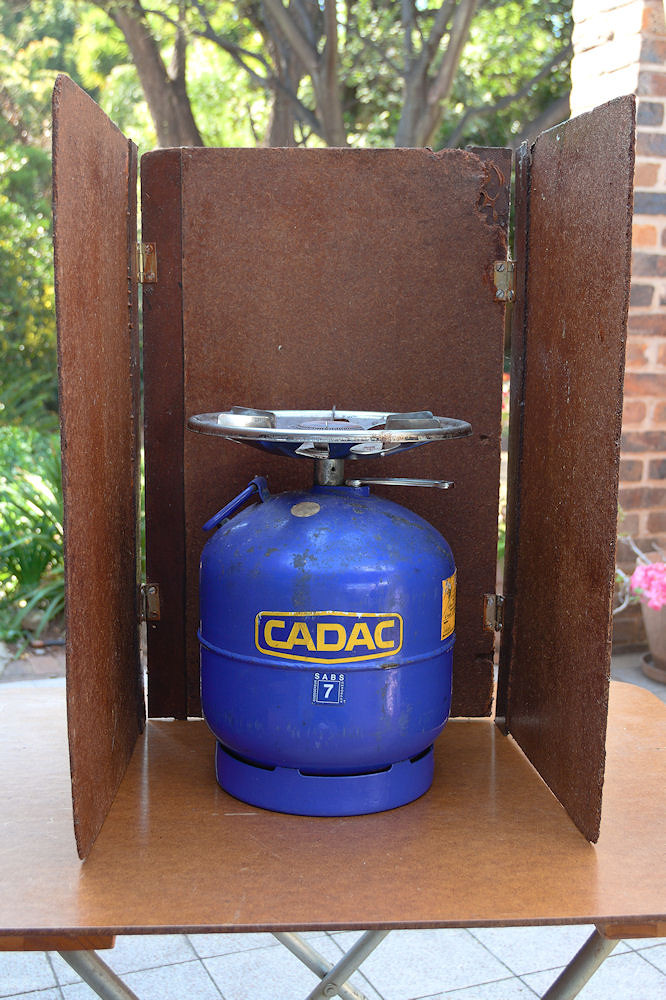
Cadac 7 gas cylinder
The cooker unit is part of a potjie cooker, with its own windshield removed. The pic below shows the cooker with the potjie windshield in place, with a No 1 potjie on the cooker.
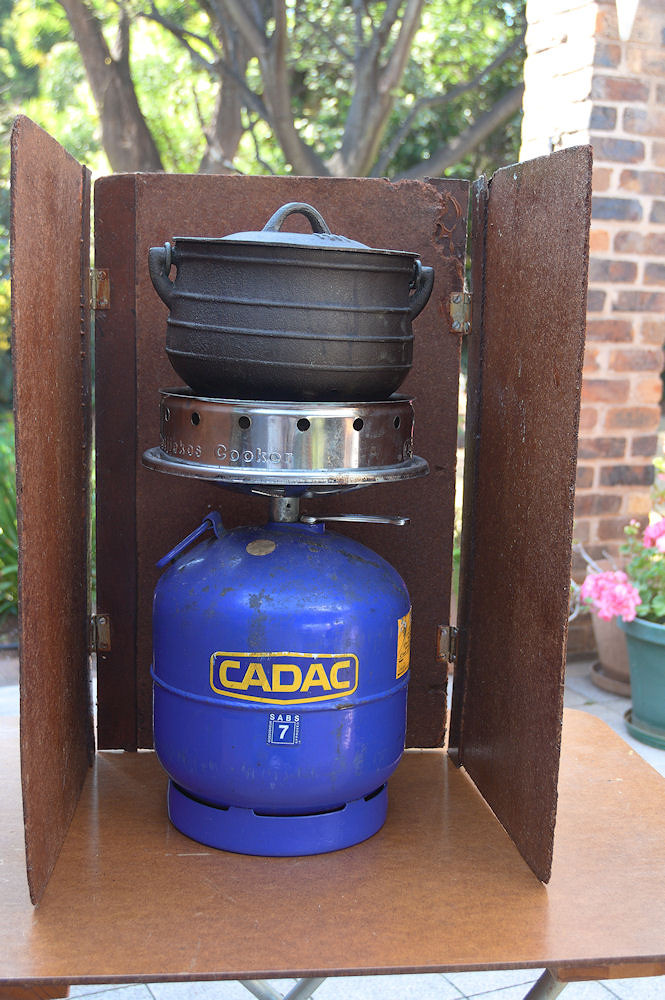
Cadac 7 with a potjie
Lee also made some boxes for the cylinders and the potjies that we had. These were very useful in preventing them rolling around in the back of the bakkie. Proffie made a box for the potjie cooker.
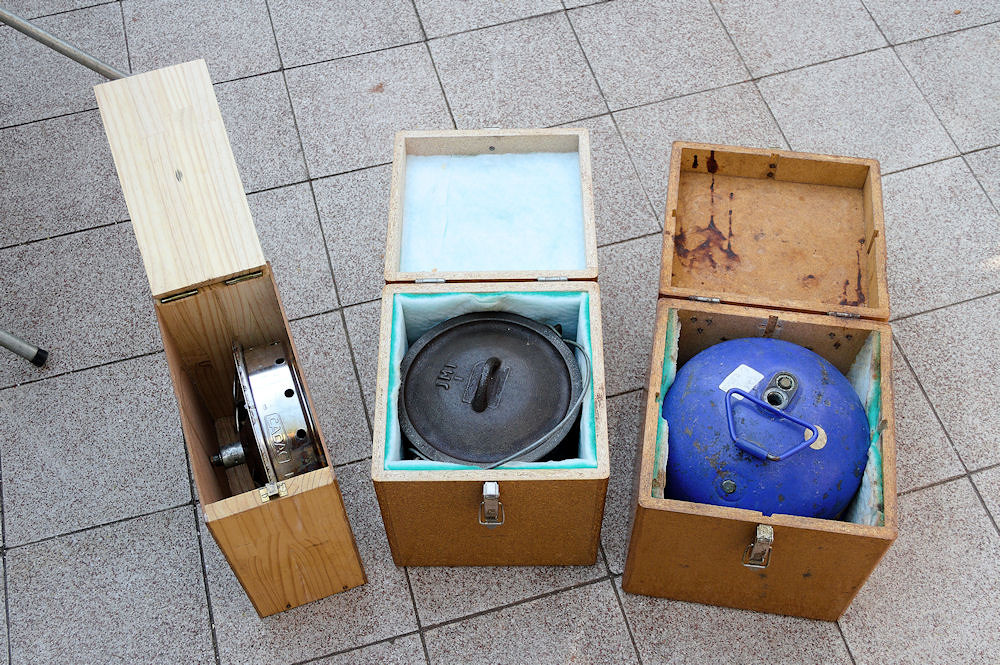
Boxes for the potjie cooker, the potjie and the gas cylinder
This setup served us well on our travels through Africa in the 80s and 90s. However, it is heavy, and the packing volume required is appreciable.
Camping Gaz
These stoves are predominantly hiking stoves, but very useful for overland travel, especially if packing space is at a premium (which it is if you don't travel with a trailer).
Hannalien and Proffie used a Camping Gaz Stove on their travels for many years and still swear by it. My biggest problem is how do you safely discard the used cannisters, especially when on the backroads of Africa.
We have one of these devices, and I hope to share the reasons as to why I am not a fan of the device I have.
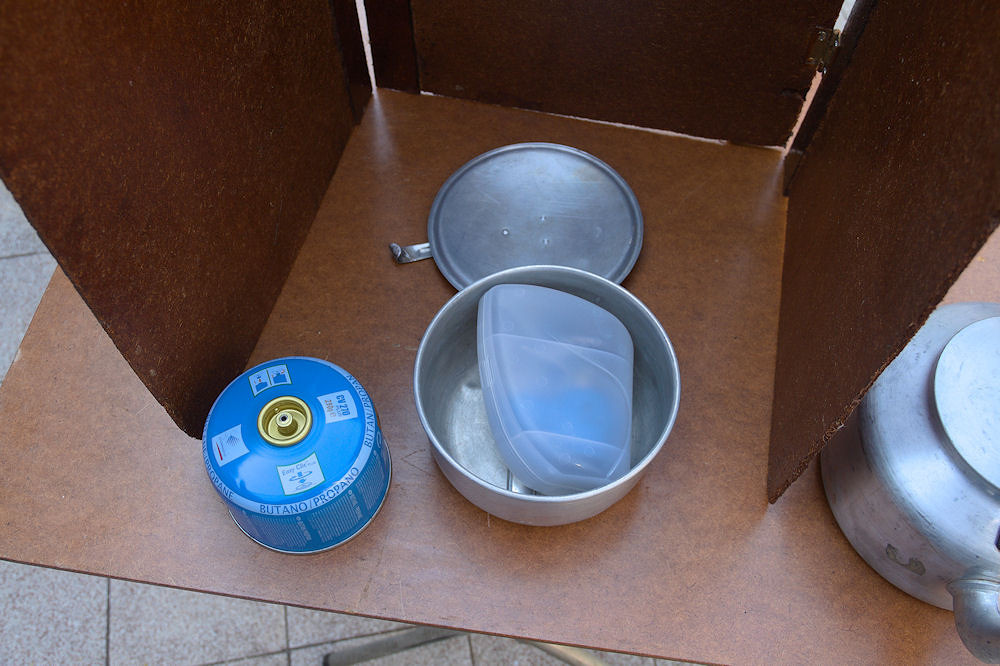
The Gaz cooker, stored in a pot
As you can see, this device is really tiny. It fits in a hiking pot.
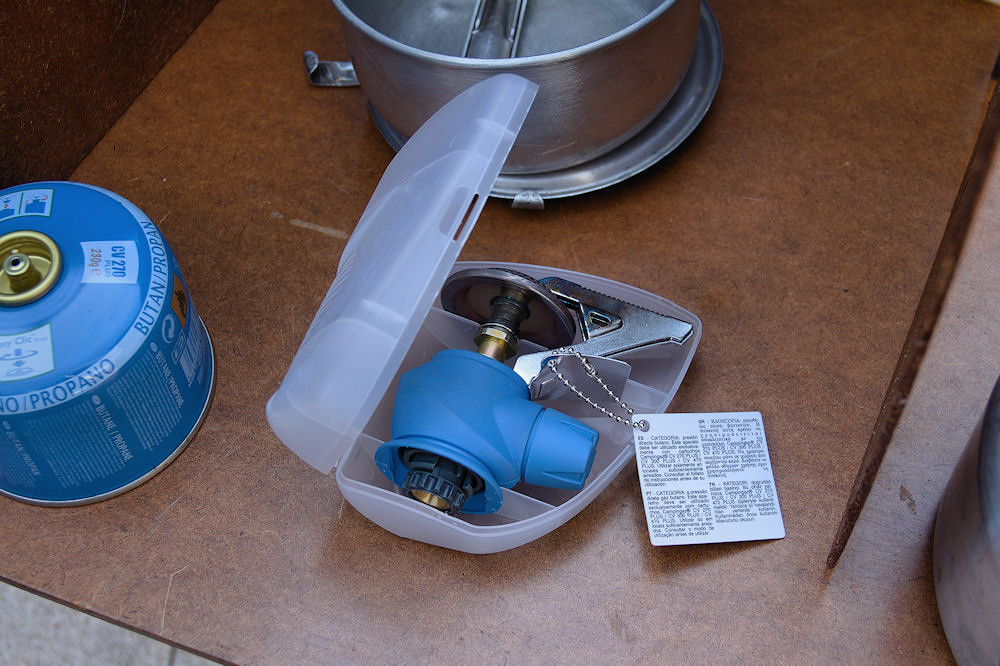
The Gaz cooker, in its container
The cooker just clips into the gas cannister. It can be clipped out just as easily again - the rubber in the gas cannister seals the cylinder once the cooker is removed in the same way that an ampoule for a medical syringe does.
Here the stove with a kettle ready for heating.
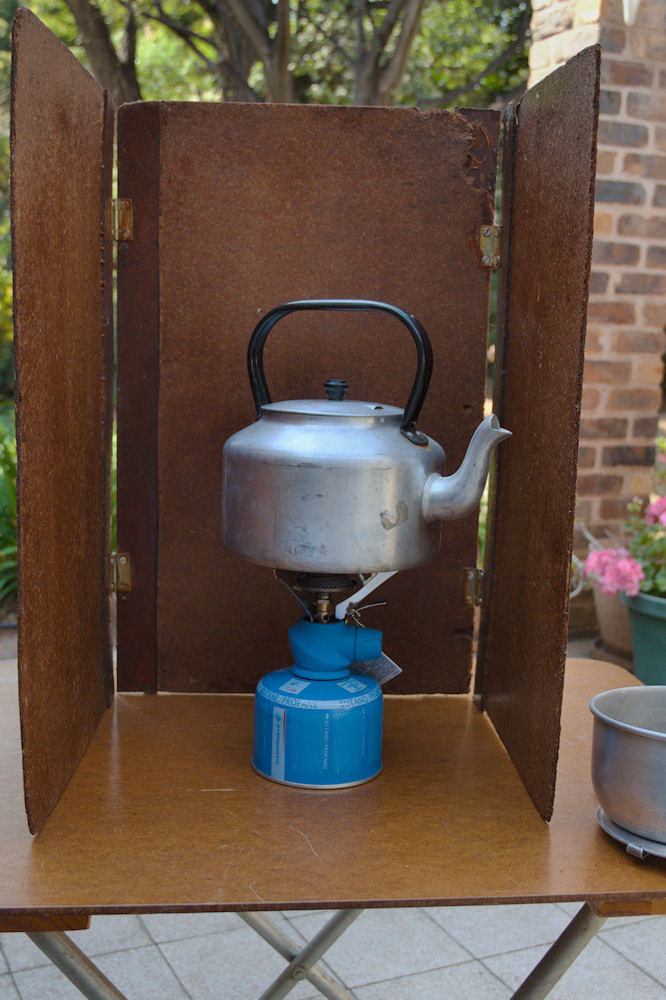
Gaz stove, ready for use
As you can see from the above pic, the base of the cannister is smaller than the base of the kettle making it very top heavy. This means the system as a whole is not very stable and can easily overbalance. This problem is exacerbated when something like a frying pan is used on the stove as the handle makes it even more unstable (even with the lightweight hiking pan shown in Fig 4 below).
Another problem I have found is the valve on the stove no longer shuts off properly. This results in a very faint odour of gas and I find this rather worrying. What I have take to doing is removing the cannister from the cooker as soon as it has cooled down after use.
Alva Single Burner
This stove is also very compact and comes with its own carry case. Like the Gaz stove, it uses disposable gas cannisters.
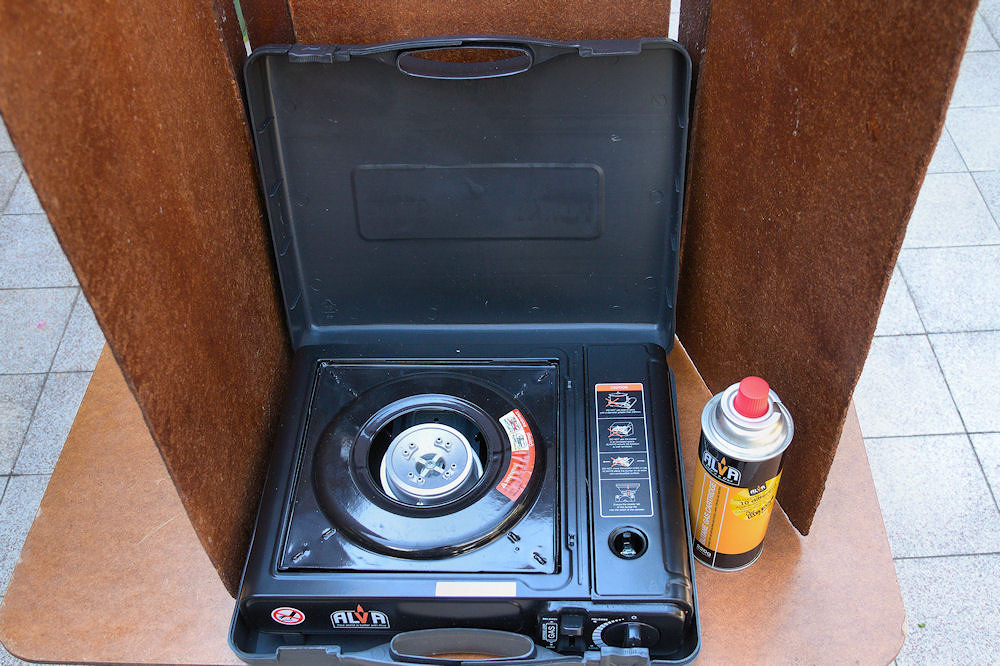
Fig. 1: The Alva cooker in its case
If you look at the gas cannister in Fig 1, you will notice a notch in the ring around the top on the right side of the cap. This notch is used to align the cannister when inserting it into the stove. In Fig 2, the clip that fits into this notch is on the top of cannister.
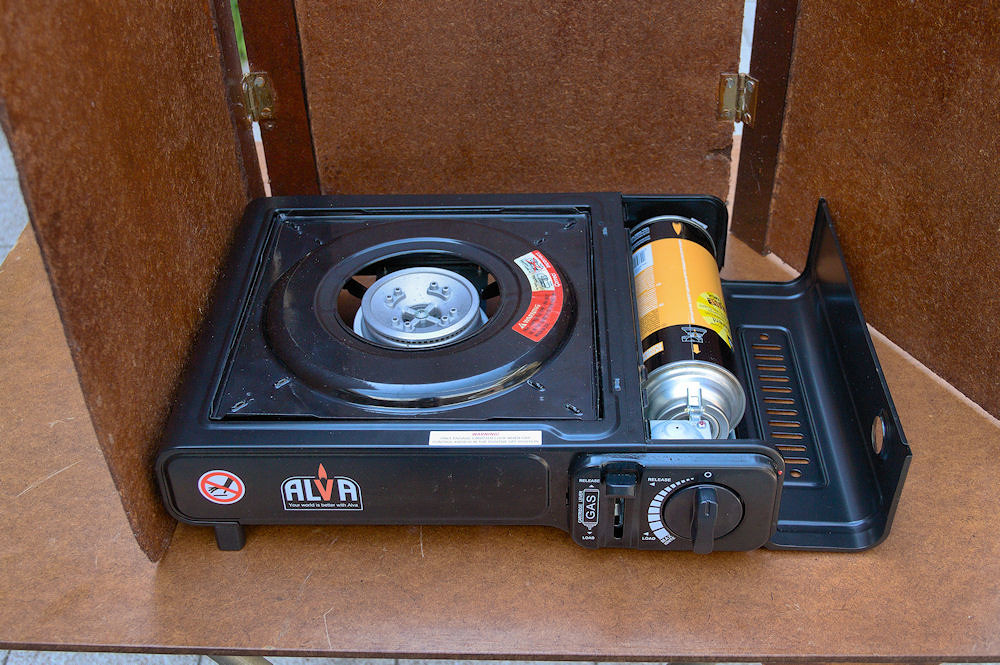
Fig. 2: The Alva cooker with the gas cannister in position
In order to use the stove, the cooker unit needs to be inverted as shown in Fig 3. At this stage, the lever to the left of the control knob needs to be depressed fully. This locks the gas cannister into position and allows a gas flow. It also locks the cooker into position.
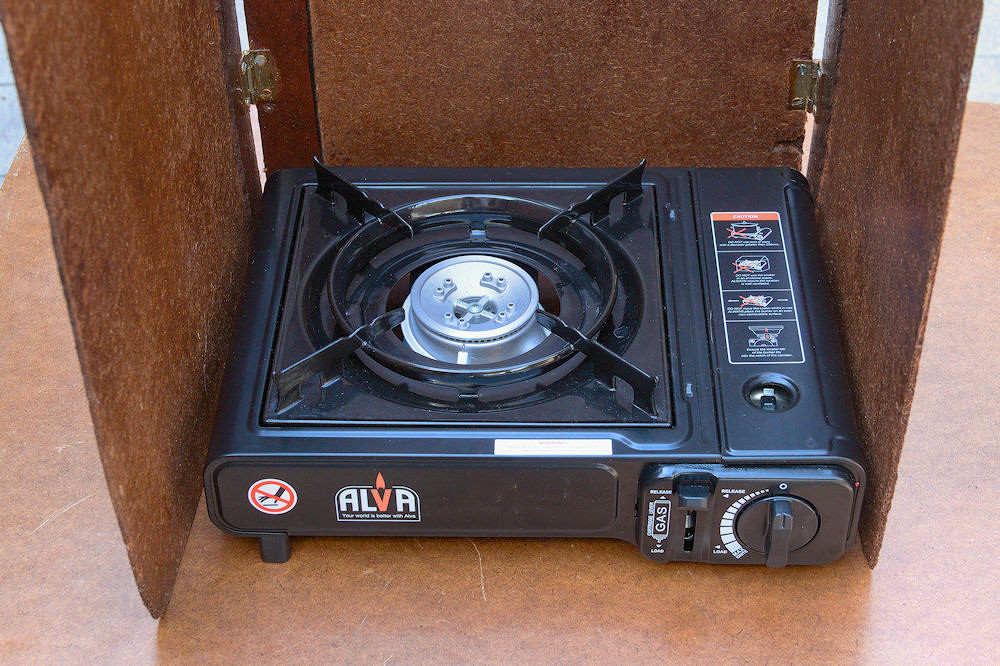
Fig. 3: The Alva cooker with the gas cannister's cover closed and the cooker inverted for use
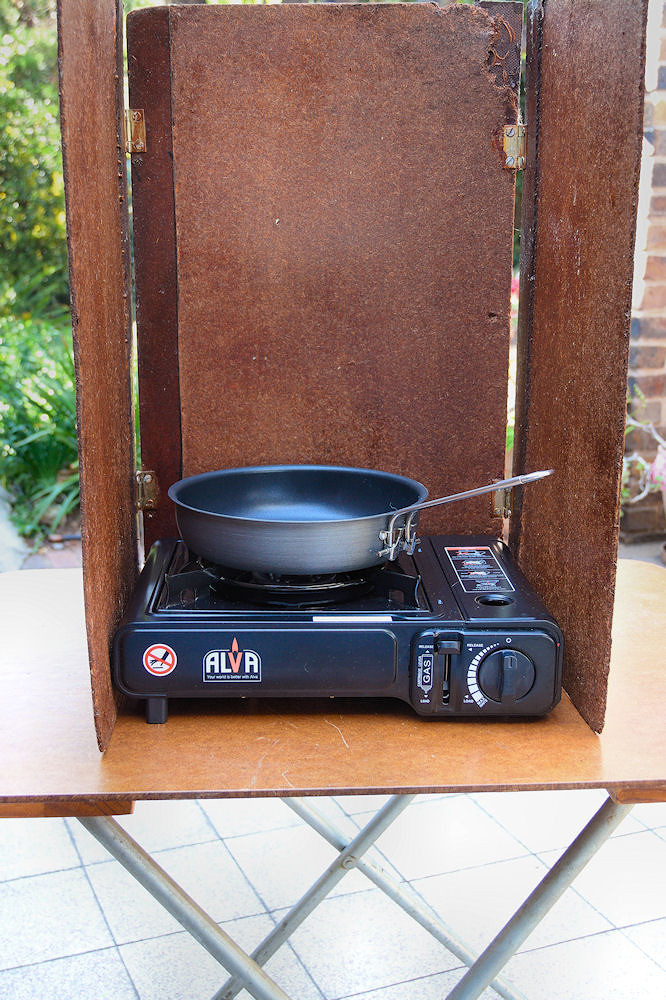
Fig. 4: The Alva cooker with a pan, ready for cooking
When the cooker is in position for cooking as shown in Fig 3, and put back in the case, as in Fig 1, the case cannot be closed. This maybe some kind of safety feature to prevent gas leaks. However, Francois has the Cadac equivalent of this stove, and his stove can be stored in the case with the cooker ready to be used.
Lee's Windshield
When we were doing birdlists for the ranger in Malalotja Nature Reserve, Swaziland (in the 80s), Lee and Linda did quite a few trips with us. Lee saw the problems with trying to shelter the flame from the gas cylinder from the wind. This prompted him to build v1 of the windshield, which consisted of three sheets of 3mm pressed wood. These were held together with six pieces of wire which acted as the hinges and allowed the shield to be folded easily. Unfortunately, with many camping trips, the panels became rather worn, especially on the corners and the holes where the wires went through. When I was busy with a varnishing project a few years back, I decided to revamp the shield.
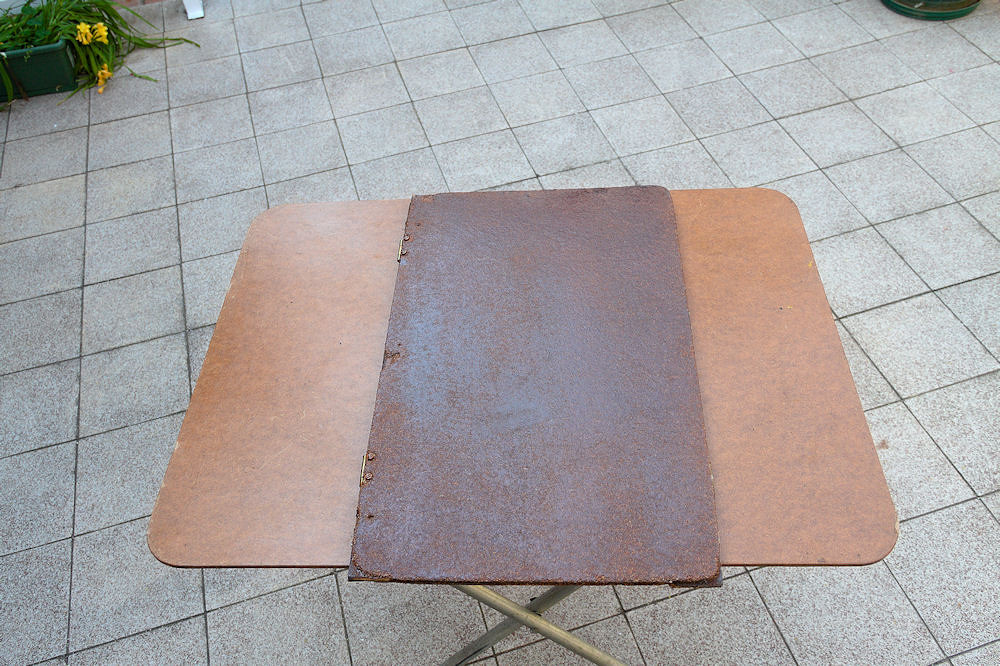
My modifications mainly consisted of adding proper hinges to the system, rather than the pieces of wire Lee used. As the pressed wood is very flimsy, I had to reinforce the edges where I wanted to put the hinges. For this, I used strips of masonite which I glued to the edges of the pressed wood. In the picture below, you can see the windshield opened to lie flat, showing the masonite reinforcing and the hinges. I used small bolts to fasten the hinges to the panels.
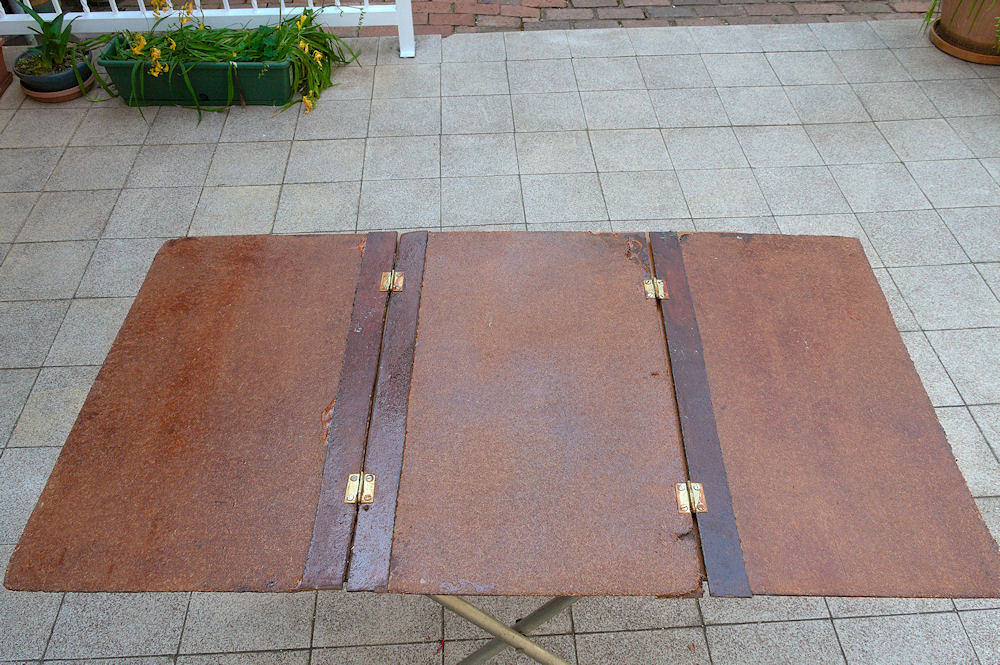
The windshield fully opened
The second modification I made was to cut one of the panels so that it could fit flush inside the opposite piece of masonite when folded.
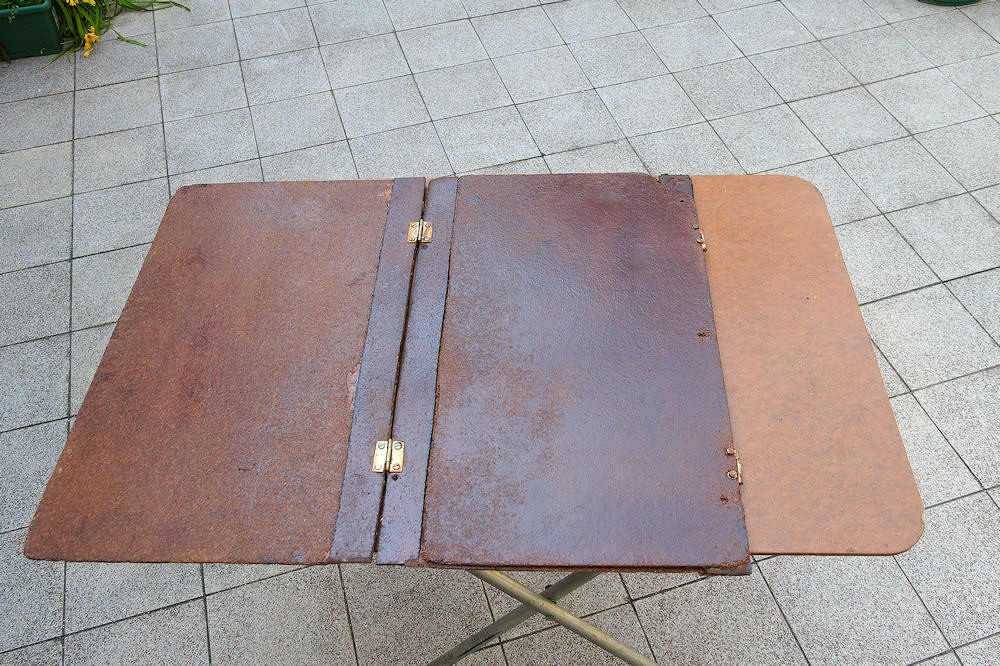
The windshield with the narrower panel folded close
Notice the nuts on the right side of the closed panel. I had to be very careful when tightening the nuts as they tended to pull through the pressed wood, even with a washer in place. I had to trim the bolts so that they ended flush with the nut so they did not damage the panel which would rest on them when it was closed.
The windshield fully closed
The final part of the project was to seal the pressed wood. For this I used four coats of varnish (from Warrior Paints), which added a whole lot more strength to the pressed wood.
(updated: 17 September 2022)
Back to Camping Gadgets
