Gadgets
High Pressure Cleaner: Turbo Nozzle #2
Introduction
As an accessory to my Turbo Pro HP2000, I have found a turbo nozzle to be very useful. As I mentioned in my review of the nozzle, which I had bought from Temu, I was not too happy with the way it worked (or rather did not work). This led me to look for a new one, with a different construction. Included in the order was a QC adaptor to replace the one I had broken.
This particular turbo nozzle had a choice of five, each with a different bore. I had no idea which one to choose, so I chose the middle one with a diameter of 1.21mm, numbered 040.
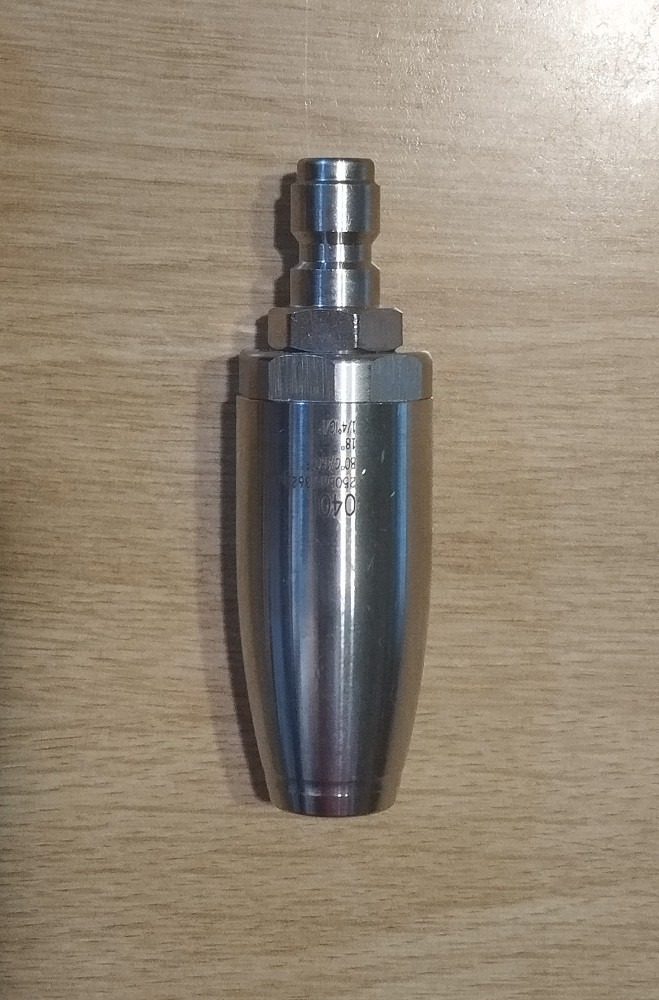
The new nozzle
I have found out (thanks to ChatGPT) what the numbers on better quality nozzles actually mean.
- The rated pressure, usually given in psi (in the case of this turbo nozzle: 3625 psi or 250 bar). This is the maximum working pressure the nozzle is designed to withstand.
- The bore of the actual nozzle in mm (in this case: 1.21 mm). Although this is not normally marked on the nozzle, it was given in the sales description.
- The orifice size is a three-digit number related to the flow rate of the nozzle (in this case: 040).
- It is a functional number, not a physical diameter.
- 040 corresponds to approximately 4.0 GPM (gallons per minute in US gallons) at the standard reference pressure (typically 4000 psi).
- The effective orifice size depends on both the bore and the operating pressure.
- In practice, the quoted orifice size is a nominal value, as discharge coefficient, nozzle geometry, and wear all influence the actual flow rate.
- Note: the three-digit number is GPM × 100, which is why 040 means 4.0 GPM.
- Many complaints from end users arise because they do not consider the nozzle numbers alongside the ratings of their pressure washers; flow and pressure must match the washer’s capabilities for the nozzle to perform as intended.
For those interested, a table relating these parameters can be found on the Ultimate Washer website. A nozzle size calculator can be found on the MTM Hydro website. Both of these sites require the use of US units, so the conversion factors from metric are:
- [PSI] = [Bar] x 14.5038
- [GPM] = [L/min] / 3.785
Using the nozzle
I had a lengthy test of the nozzle when washing a blanket (!!), a wheelie bin and a section of the back stoep. The whole episode took about 2½ hours, but this included using the foam cannon and giving the foam a chance to work on the items being washed.
The turbo nozzle did not falter once, it spun up almost immediately on pressing the trigger on the gun. When rinsing the stoep, it ran without a hiccup for minutes on end.
My only gripe with this nozzle, was that it did not seem to have enough power to actually do any power cleaning. However, I did have the nozzle coupled directly to the gun. This meant, if one takes my height into account, the nozzle was more than a half a metre from the surface being cleaned. Calculations show that for this particular nozzle, a distance of 15 to 20 cm is more appropriate. I was a bit wary of using the extension tubes, but will try that as soon as the weather improves.
Adding the extension tube with a bend made a huge difference to the cleaning ability of the nozzle. This allowed me better control of the distance between the nozzle and the ground - in this case, I tried to keep this distance at 20 cm.
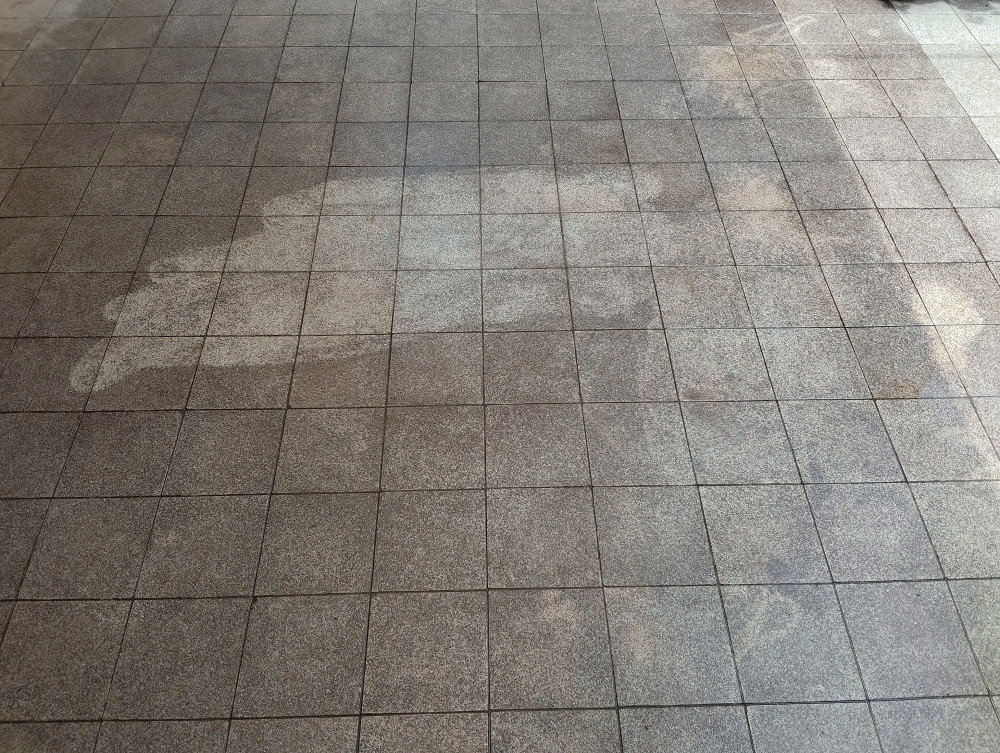
Using the nozzle to clean tiles
As you can see from the pic, the new turbo nozzle does a pretty good job of cleaning the tiles. The patch in the centre was done by the new nozzle, the patch on the right by the old nozzle (albeit a while back).
I also cleaned an awning and some fascia boards after the tile cleaning test shown above. The nozzle spun up every time on pressing the trigger on the gun. The first turbo nozzle was really a waste of money.
(updated: 16 December 2025)
Update: Cleaning the patio
We finally got around to cleaning the patio. Only once we really got going could you really see how much grime was caked on the tiles, in spite of regular washing with soap and water. This grime really shows up when the tiles are wet.
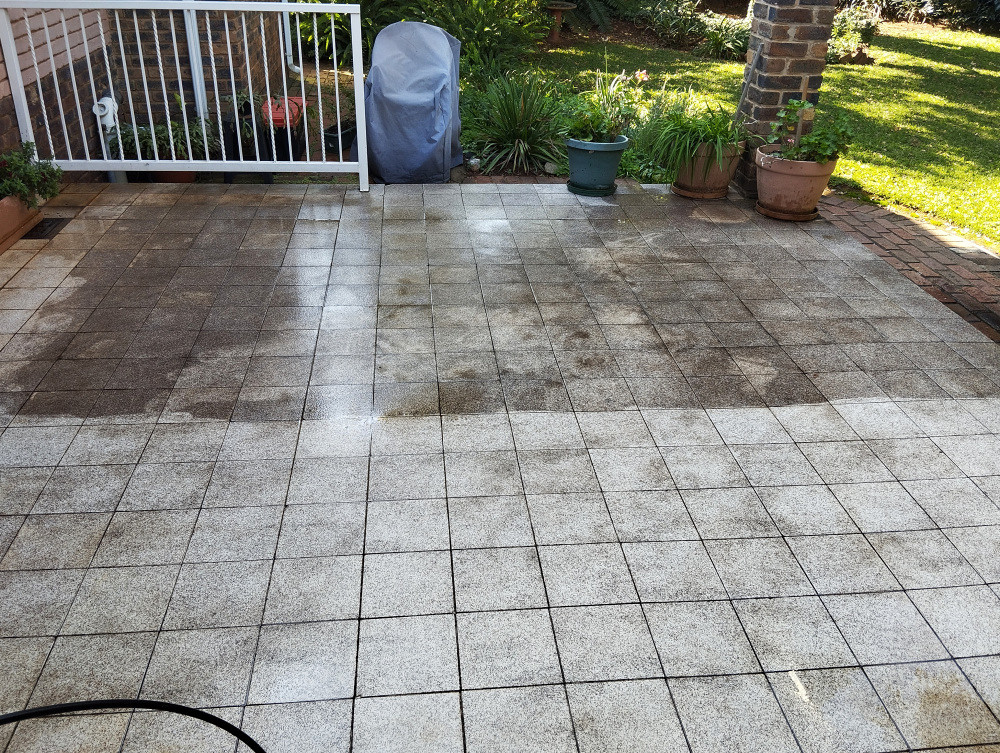
A section of the patio cleaned
This new turbo nozzle and the extension tube with the 30° bend, was definitely tougher than the dirt built up over the years.
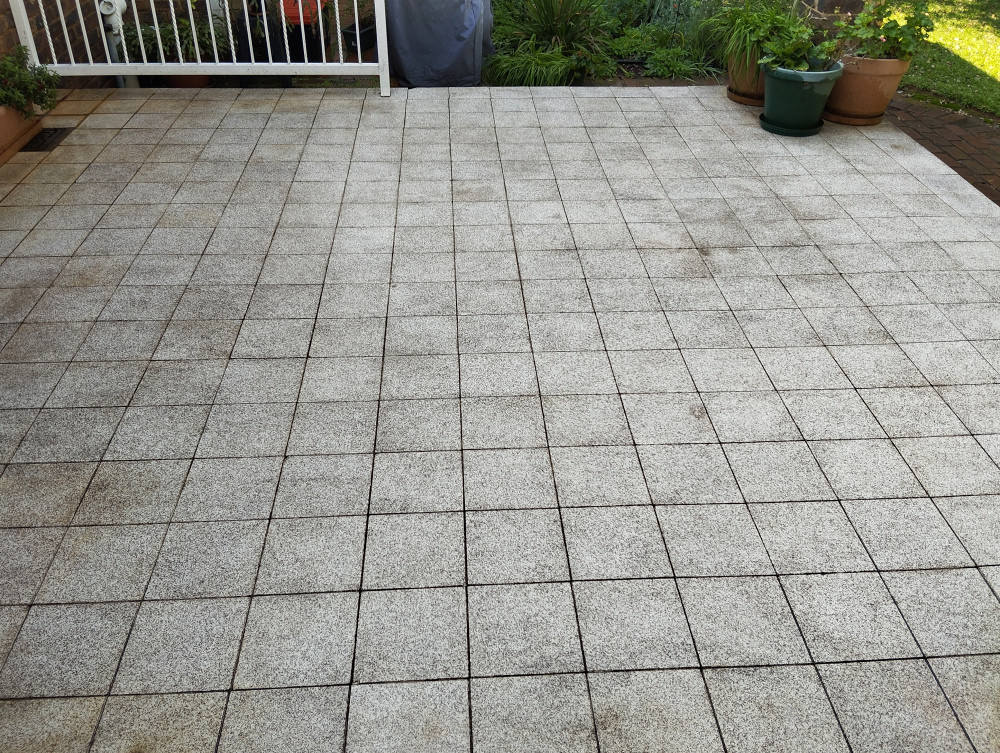
After the first clean
Here you can see how well the turbo nozzle had done after the first round of cleaning. All that was now neccessary was to try and improve on the areas that still looked a bit grubby.
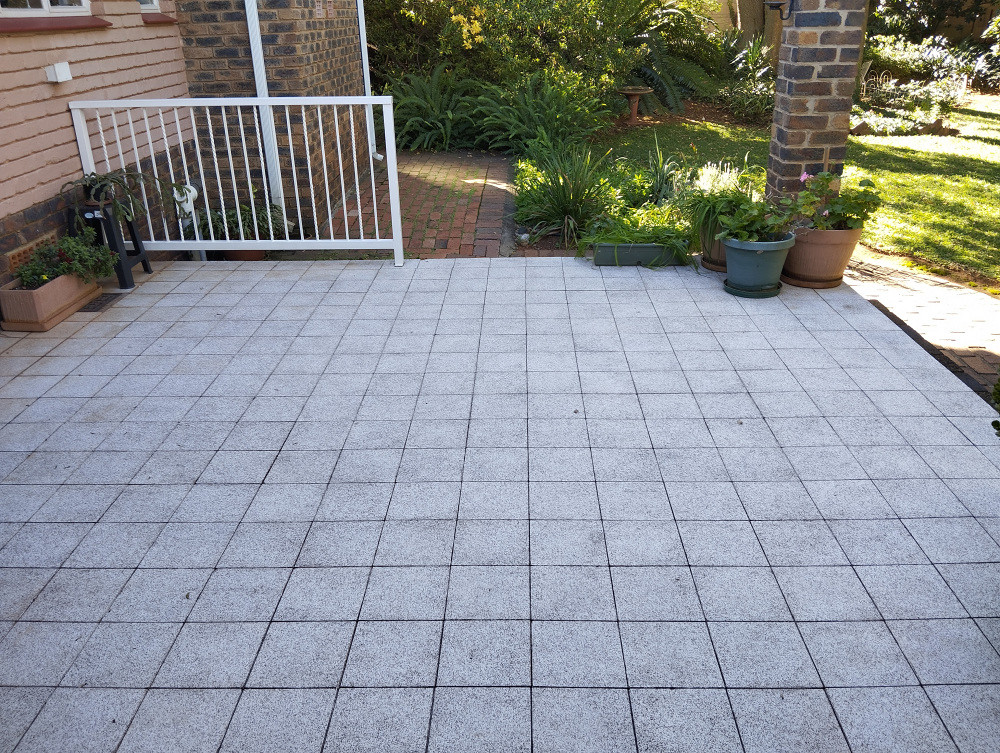
The patio, now clean and dry
What was really impressive was how well this new turbo nozzle handled the job. It did not falter once in cleaning the section of the patio shown above, nor the section behind my point-of-view.
(updated: 12 May 2026)
Components of the nozzle
I have not yet had a chance to take the nozzle apart, but these are the components of the nozzle as shown in the sales blurb on the Temu website.
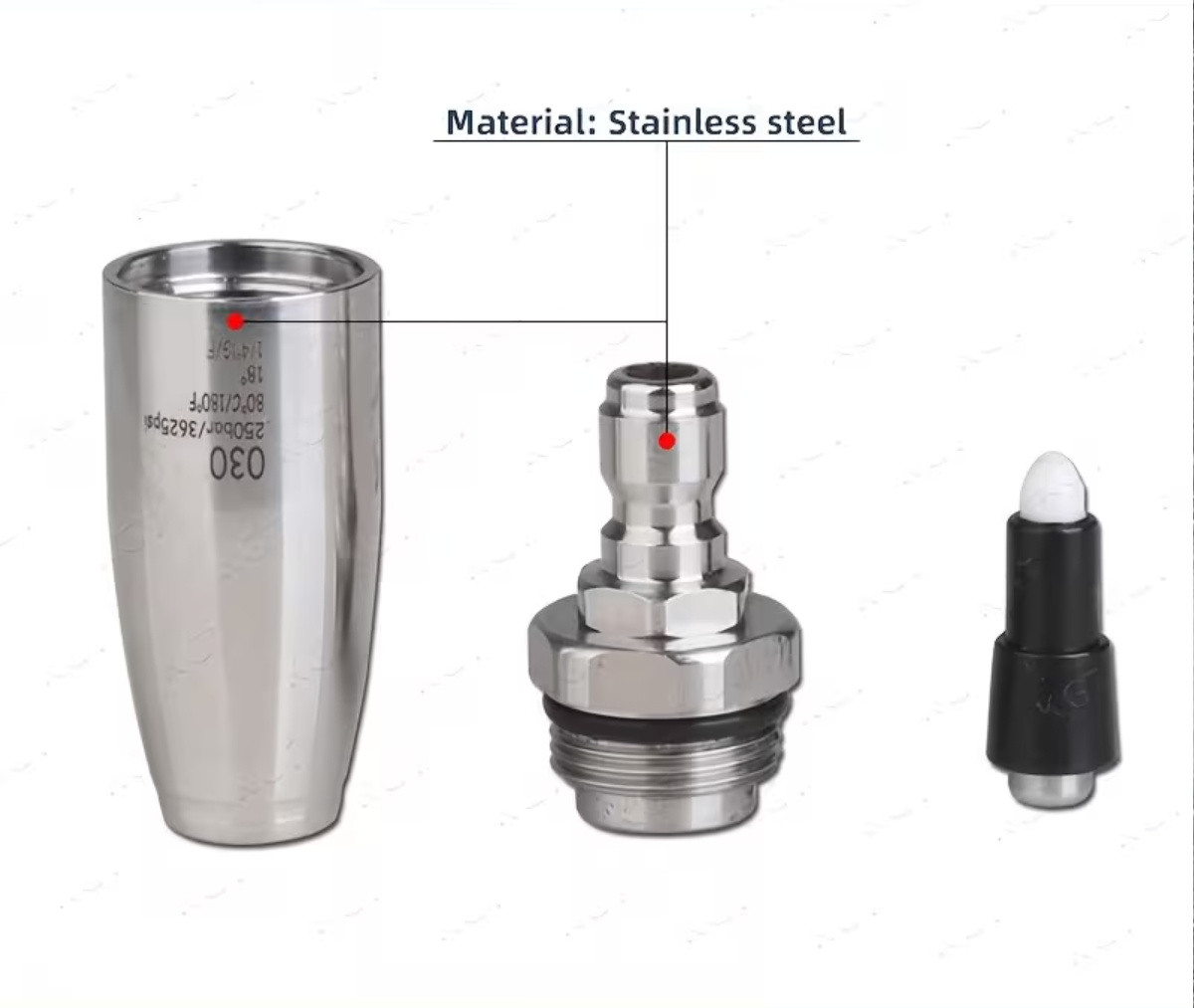
The components of the turbo nozzle as shown on the Temu website
(updated: 16 December 2025)
Useful links
